
EBT Card Balance
Check what's left on your SNAP or cash account by phone, app, portal, or receipt.
An EBT card is how you access SNAP food stamps and cash assistance — and it works just like a debit card. Learn how to check your balance, sign into your account, request a replacement, and shop with confidence.

Check what's left on your SNAP or cash account by phone, app, portal, or receipt.
Sign into your state's EBT portal to view deposits, history, and case details.
Lost, stolen, or damaged? Report it fast and get a new card in 5–7 business days.
See exactly what you can and cannot buy with your food stamp benefits.
Short for Electronic Benefits Transfer, an EBT card is the modern replacement for paper food stamps.
An EBT card — short for Electronic Benefit Transfer card — is a plastic payment card issued by your state government that lets you access government assistance benefits electronically. Instead of receiving paper food stamps or paper benefit checks, eligible households receive a reloadable card that works like a debit card at authorized retailers and ATMs.
An EBT card is what you use to access benefits like SNAP (Supplemental Nutrition Assistance Program) and TANF (Temporary Assistance for Needy Families). EBT cards look like regular debit cards, but they have specific spending rules about where you can shop and what you can buy.
EBT accounts are managed by your state human services agency rather than a traditional bank. Each month that you qualify for food stamps or cash assistance, your state adds money to your EBT account. The EBT system replaced the old paper food stamp program starting in the 1990s and was fully nationwide by 2004.
| Feature | EBT Card | Bank Debit Card |
|---|---|---|
| Funded by | Government benefit programs | Personal bank account |
| Where accepted | SNAP-authorized retailers only (food benefits) | Anywhere Visa/Mastercard is accepted |
| Cash withdrawals | Cash account only — never SNAP | Any ATM |
| Online use | Limited authorized retailers | Most online stores |
| Overdraft | Not possible — balance can't go below $0 | May trigger overdraft fees |
| PIN required | Always | Usually optional |
| Expiration | Benefits can expire if unused | Card expires; funds remain |
It's easy to get confused about these programs since they're often mentioned together:
You might qualify for more than one program — many people receive both SNAP and WIC benefits.
Most EBT cards can hold two separate benefit balances — each tracked independently.
Used for eligible food purchases at authorized retailers. Loaded monthly for SNAP, or as a one-time deposit for programs like Summer EBT.
Loaded by TANF, General Assistance, or other state cash programs. Can be spent on almost anything, including bills and everyday essentials.
From activation to checkout — here's the whole process, step by step.
Use the toll-free activation number on the sticker or the back of the card.
You'll enter your 16-digit card number, date of birth, and often the last four digits of your SSN.
Avoid obvious combinations like 1234, 0000, or your birth year.
Your card is ready as soon as benefits are loaded to your account.
Look for the SNAP/EBT or Quest® logo, or use the USDA retailer locator.
Know what you have before you get to the register and budget accordingly.
Select EBT at the terminal and enter your secret PIN on the keypad.
Tell the cashier — or enter yourself — how much of your benefits to apply.
Your remaining EBT balance is printed at the bottom of most receipts.
What you can purchase depends entirely on which account you're drawing from.
Tip: If you're buying both eligible and non-eligible items, ask the cashier to ring up non-SNAP items separately so you can pay for them with another method.
Four reliable ways to see exactly how much you have left before you shop.
Many states offer an official EBT app — plus third-party balance checkers.
Call the number on the back of your card for your balance and last 10 transactions.
Log into your state's EBT portal to view balances, history, and deposit dates.
Most stores print your remaining SNAP balance at the bottom of every receipt.
Stop guessing at the register. Track your EBT balance, upcoming deposits, and spending — all in one place.
Qualifying for SNAP benefits depends primarily on three key factors.
Your income from the last 30 days must be under the limit for your household size. For example, a single person typically needs to make about $2,510 or less per month before taxes. Child support and recurring medical bills may be deducted.
Your "household" includes everyone who buys and prepares food together. The more people in your household, the higher the income limit — and the larger your monthly benefit.
You must be a U.S. citizen or have eligible immigration status. Refugees and asylees may qualify immediately, while lawful permanent residents typically need to wait five years.
In most states, able-bodied adults without dependents (ABAWDs) ages 18–54 must meet work requirements, including registering for work, not quitting or reducing hours, accepting job offers, and joining employment training if required.
Many groups are exempt, including seniors, pregnant people, and those with a documented disability. College students may qualify if they meet an exemption such as federal work-study or working at least 20 hours per week. Gig workers and self-employed people can qualify too — typically only 60% of earnings count toward the income limit.
You don't apply for an EBT card directly — it's issued automatically once you're approved.
Submit an application for SNAP, TANF, or another EBT-delivered program through your state's social services agency.
States must approve SNAP applications within 30 days — or 7 days if you qualify for expedited assistance.
Your EBT card arrives in a plain white envelope within about 7 business days and will be inactive.
Call the activation number included with your card and choose a four-digit PIN.
Benefits load automatically on your state's issuance schedule each month.

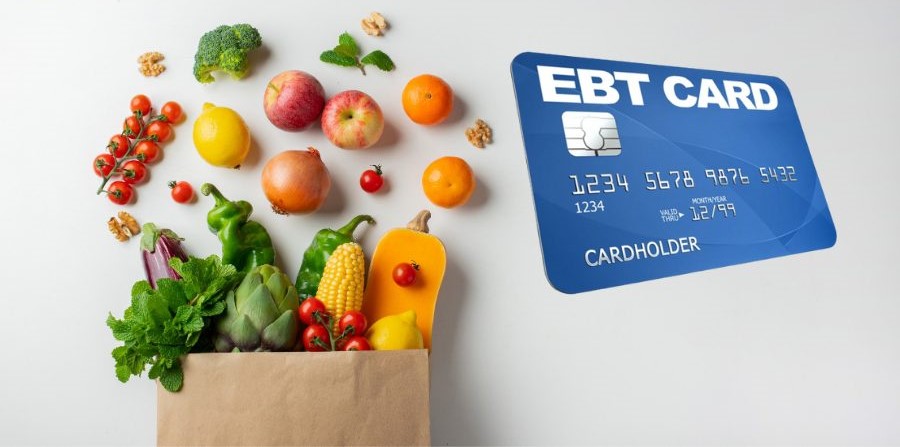

Act fast — if someone else gets your card and PIN, those benefits may not be replaced.
Use the number on the back of your card, available 24/7, and report it lost or stolen.
Your old card is deactivated immediately. A new one arrives in about 5–7 business days.
Never reuse the PIN from your old card once your replacement arrives.
Check for unauthorized charges and ask about filing a claim for stolen benefits.
Many states charge around $5, deducted from your benefits. Fees are often waived for:
Get guided support for balance checks, replacement requests, and SNAP account access.
EBT theft is a serious crime. Skimming and phishing are the most common tactics used to steal benefits.
Never share it — not with family outside your household, clerks, or anyone who calls claiming to be from the benefits office.
Shield your hand when entering your PIN to block hidden cameras and shoulder surfing.
Change it before your benefits arrive each month — especially if your state has had a skimming incident.
Frequent balance checks help you catch unauthorized transactions early.
Your state will never text or email asking for your card number or PIN.
If your state offers card-locking and out-of-state blocking, turn both on.
Your EBT card does more than buy groceries — it can unlock free and discounted perks nationwide.
Through Museums For All, show your EBT card for admission of $5 or less for up to four people at over 1,400 museums, zoos, and aquariums.
Free or reduced bus and subway passes, bike share memberships, and discounted ride-sharing in select cities.
Lifeline discounts of up to $9.25/month off phone or internet — more for households on Tribal lands.
Many YMCAs offer reduced or half-price memberships for SNAP participants.
GED test fee waivers, college application fee waivers, and reduced SAT/ACT fees.
Discounted Prime Access, DoorDash+, Instacart+, and Sam's Club memberships for benefit recipients.
Quick answers to the questions people ask most.
An EBT card is used to spend benefits from programs like SNAP (food stamps) and TANF (cash assistance). You can buy eligible groceries at authorized stores, farmers markets, and select online retailers. Cash benefits can also be withdrawn at ATMs.
You can check your balance by calling the customer service number on the back of your card, logging into your state's online benefits portal, using a mobile app, or checking your most recent grocery receipt.
Call your state's EBT customer service line immediately to report a lost, stolen, or damaged card. Your old card is deactivated and any remaining benefits transfer to the new one, which arrives by mail in about 5–7 business days. Some states charge a small replacement fee and offer same-day pickup at a local office.
The physical card has an expiration date printed on it — typically 3 to 5 years from issuance. Benefits loaded to the card can expire independently if the account is inactive for an extended period, usually 365 days for SNAP. You'll receive a replacement card before the expiration date.
Yes. EBT cards work nationwide at any SNAP-authorized retailer, regardless of which state issued your card. If you move permanently, you'll need to close your case in the old state and apply in the new one — you can't receive SNAP from two states at once.
Only if your card has a cash benefit balance from TANF or another cash program. SNAP food benefits can never be withdrawn as cash.
Any member of your household or a caregiver can use your EBT card if they know your secret PIN. The primary cardholder can also request an authorized representative card for a trusted adult. Each household can have up to two cards.
Common causes include an incorrect PIN, an expired or damaged card, insufficient balance, an item that isn't SNAP-eligible, or a retailer's EBT terminal being offline. If it still fails, call the customer service number on the back of your card.
Yes. Benefits that aren't spent in a current month roll over to the next month as long as your case stays active. However, if your case is closed and the card goes unused for an extended period — typically 12 months — remaining benefits may be expunged.
Check your balance, track deposits, and get help with your SNAP account — all in one simple step.